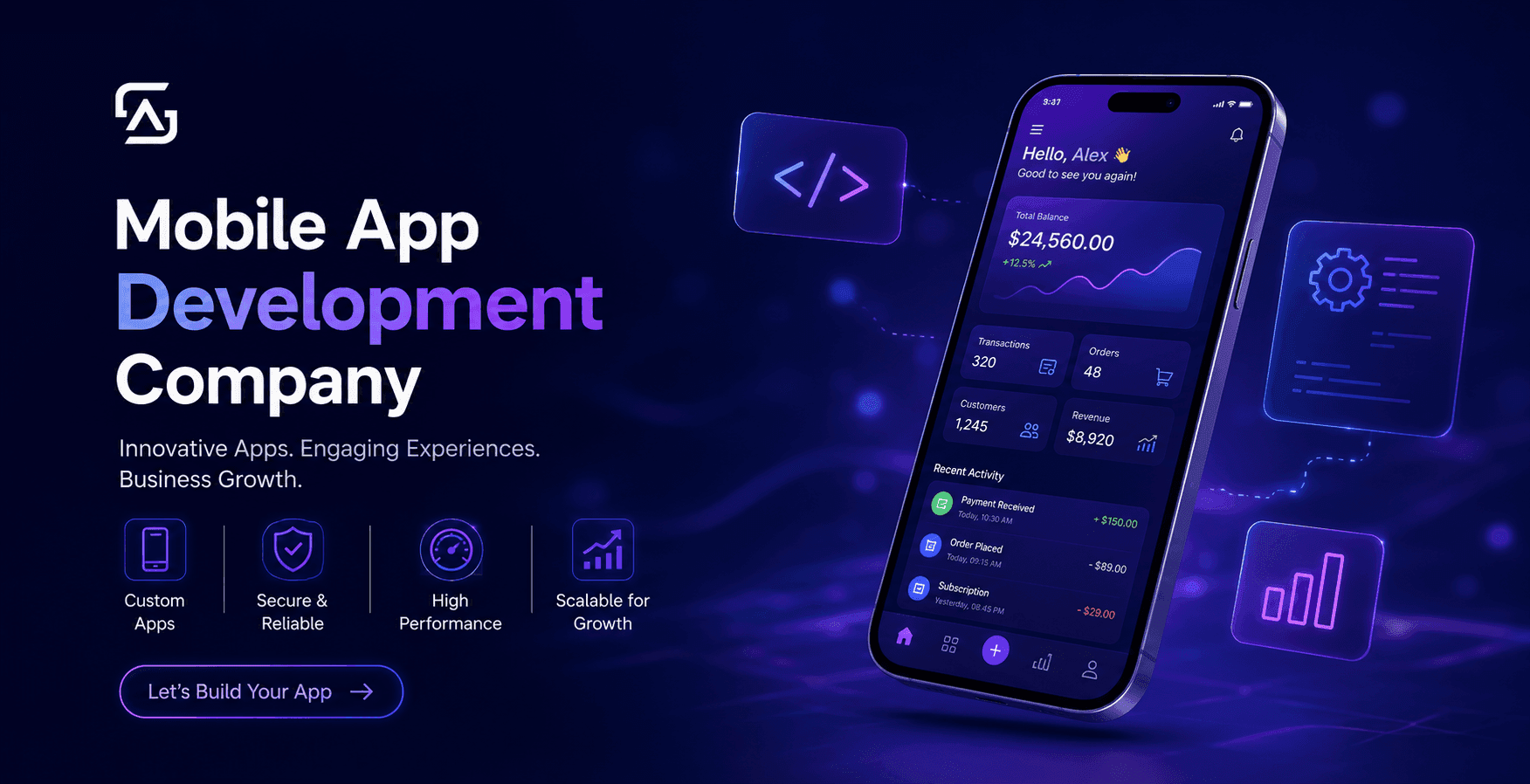
You've probably already recognized that a mobile app can help your business reach more customers and create new revenue opportunities. What many companies overlook is that the success of an app often depends more on the development partner than the idea itself. In this guide, we'll explain what a mobile app development company does, how to evaluate providers, what costs to expect, and how to choose the right partner for your project.
Key Takeaways
- A mobile app development company designs, develops, tests, deploys, and maintains mobile applications for businesses.
- Professional development teams reduce technical risks and accelerate time-to-market through proven processes.
- Native and cross-platform development serve different business goals and budget requirements.
- Mobile app development costs depend on complexity, features, integrations, and development resources.
- Vendor selection criteria should include portfolio quality, technical expertise, communication, and post-launch support.
- Clear project planning improves outcomes and prevents unnecessary development expenses.
- Long-term app success requires ongoing maintenance, security updates, and performance optimization.
What Is a Mobile App Development Company?
A mobile app development company is a business that designs, develops, tests, deploys, and maintains mobile applications for clients.
First, these companies help organizations transform ideas into functional mobile applications for iOS, Android, or multiple platforms. For example, a retail business may hire a development company to create a shopping app with payment processing and customer loyalty features.
Moreover, a mobile app development company typically provides:
- UI/UX design
- App development
- Quality assurance testing
- App store deployment
- Maintenance and support
- Security implementation
- Performance optimization
Mobile app development involves transforming a business idea into a functional mobile application through planning, design, development, testing, deployment, and ongoing maintenance.
What Types of Apps Do Development Companies Build?
Native app development creates applications specifically for a single operating system, while cross-platform development allows one codebase to support multiple platforms.
For example, banking applications often use native development to maximize security and performance. In contrast, startups frequently choose cross-platform frameworks to reduce costs and launch faster.
According to Statista, global mobile app revenue is projected to exceed $613 billion in coming years.
Why Does a Mobile App Development Company Matter for Business Growth?
A mobile app development company matters because it provides specialized expertise, development resources, and strategic guidance that most businesses do not possess internally.
First, experienced teams help reduce costly mistakes. For example, a company launching a healthcare app must comply with security and privacy requirements that inexperienced teams may overlook.
Moreover, professional development partners accelerate delivery timelines. Organizations using dedicated development teams often reach market faster than businesses building internal teams from scratch.
According to BuildFire, mobile users spend more than 88% of their smartphone time inside apps rather than mobile browsers.
Key Business Benefits
- Improved customer engagement
- Increased revenue opportunities
- Stronger brand visibility
- Better customer retention
- Competitive differentiation
What Services Does a Mobile App Development Company Offer?
Mobile app development services include strategy, design, development, testing, deployment, and long-term maintenance.
Mobile App Strategy and Discovery
First, discovery services help validate ideas before development begins. For example, teams may conduct market research, competitor analysis, and feature prioritization workshops.
An MVP (Minimum Viable Product) is the simplest version of an app that delivers core functionality while allowing businesses to validate market demand before full-scale development.
UI/UX Design Services
Second, UI/UX design focuses on creating intuitive user experiences. For example, food delivery apps prioritize simple navigation and fast checkout experiences.
Development and Quality Assurance
Third, development teams build app functionality while QA specialists test performance, usability, and security. According to Google research, 53% of mobile users abandon experiences that feel slow or frustrating.
How Does the Mobile App Development Process Work?
The mobile app development process consists of planning, design, development, testing, deployment, and maintenance.
Step 1: Discovery and Planning
First, teams define goals, audiences, requirements, and success metrics. For example, an ecommerce app may prioritize conversion rates and repeat purchases.
Step 2: Design and Prototyping
Second, designers create wireframes and prototypes that demonstrate user flows before coding begins.
Step 3: Development and Testing
Third, developers build application functionality while testers identify bugs and usability issues.
Step 4: Launch and Maintenance
Finally, teams deploy the application and monitor performance continuously.
Mobile App Development Process at a Glance
- Discovery: Define requirements and create a product roadmap.
- Design: Create wireframes, prototypes, and user experiences.
- Development: Build the application's features and functionality.
- Testing: Identify and fix bugs to ensure quality.
- Launch: Publish the app to the market.
- Maintenance: Monitor performance and release updates for long-term success.
How Much Does It Cost to Hire a Mobile App Development Company?
Mobile app development costs are influenced by app complexity, feature requirements, platform selection, third-party integrations, and development team location.
Typical Cost Ranges
- Simple app: $10,000–$50,000
- Medium complexity app: $50,000–$150,000
- Enterprise application: $150,000–$500,000+
For example, a simple booking application costs significantly less than a fintech platform requiring advanced security and compliance features.
According to Clutch research, hourly development rates often range from $25 to $150+ depending on region and expertise.
What Factors Should You Consider When Choosing a Mobile App Development Company?
Choosing a mobile app development company involves evaluating technical expertise, portfolio quality, communication processes, pricing transparency, and post-launch support.
Portfolio and Industry Experience
First, review previous projects and case studies. For example, healthcare companies should prioritize vendors with healthcare application experience.
Technology Expertise
Second, verify proficiency in technologies such as:
- Swift
- Kotlin
- Flutter
- React Native
- Node.js
- AWS
Communication and Support
Third, evaluate responsiveness and project management practices. Clear communication often predicts smoother project execution.
What Are the Common Mistakes Businesses Make When Hiring App Developers?
Businesses frequently make mistakes by prioritizing cost over quality, skipping discovery phases, and neglecting maintenance planning.
For example, selecting the cheapest vendor can result in technical debt, missed deadlines, and expensive redevelopment projects.
Common mistakes include:
- Choosing based only on price
- Ignoring portfolio quality
- Skipping requirement documentation
- Overlooking maintenance costs
- Failing to validate app ideas
Successful mobile applications require ongoing maintenance, security updates, performance optimization, and feature enhancements after launch.
Which Tools and Technologies Do Mobile App Development Companies Use?
Mobile app development companies use frameworks, cloud platforms, analytics tools, and project management software to deliver applications efficiently.
Popular tools include:
- Flutter
- React Native
- Swift
- Kotlin
- Firebase
- AWS
- Azure
- Jira
- Figma
Recommended Tool Stack
First, businesses can use Flutter or React Native for cross-platform development. Second, Firebase provides backend services and analytics. Third, Figma supports collaborative design workflows.
Free alternatives include Android Studio, Xcode, and Google Firebase's free tier.
What's Next After Choosing a Mobile App Development Company?
The next step after selecting a mobile app development company is preparing clear project requirements and defining measurable business objectives.
First, document your app vision and target audience. For example, identify whether your goal is revenue growth, customer engagement, or operational efficiency.
Second, prioritize features using MVP principles. This approach reduces risk and accelerates validation.
Third, establish KPIs such as:
- User acquisition
- Retention rate
- Revenue per user
- App store ratings
- Customer satisfaction
Conclusion
A mobile app development company is a strategic partner that helps transform business ideas into successful digital products. By evaluating expertise, processes, communication practices, and long-term support capabilities, you can select a partner that aligns with your goals.
Mobile app development company
How to choose the best mobile app development company and find the right partner for your business. Learn key factors, costs, and expert hiring tips.